7th Biodiversity Festival Organized by MINAM Will Showcase Scientific Tools and Conservation Initiatives
WWF will participate in the “7th Biodiversity Festival” in celebration of the International Day for Biological Diversity, taking place on May 23 and 24 and organized by the Ministry of the Environment (MINAM). The event is open to the public and will be held at Parque de la Exposición in Lima.
Peru is considered one of the world’s megadiverse countries, with Amazonian, Andean, and marine ecosystems that host a wide variety of species and sustain essential ecological processes, according to the Ministry of the Environment (MINAM). In this context, wildlife monitoring provides information on species composition, distribution, and activity patterns, helping assess ecosystem changes and strengthen conservation strategies.
For this reason, as part of the International Day for Biological Diversity, the Ministry of the Environment (MINAM) will hold the 7th Biodiversity Festival 2026 under the theme “Local Action for Global Impact” on May 23 and 24 at Parque de la Exposición in Lima. The event will bring together different organizations, including WWF Peru. Access to the park will be through Gate No. 1 on Av. 28 de Julio.
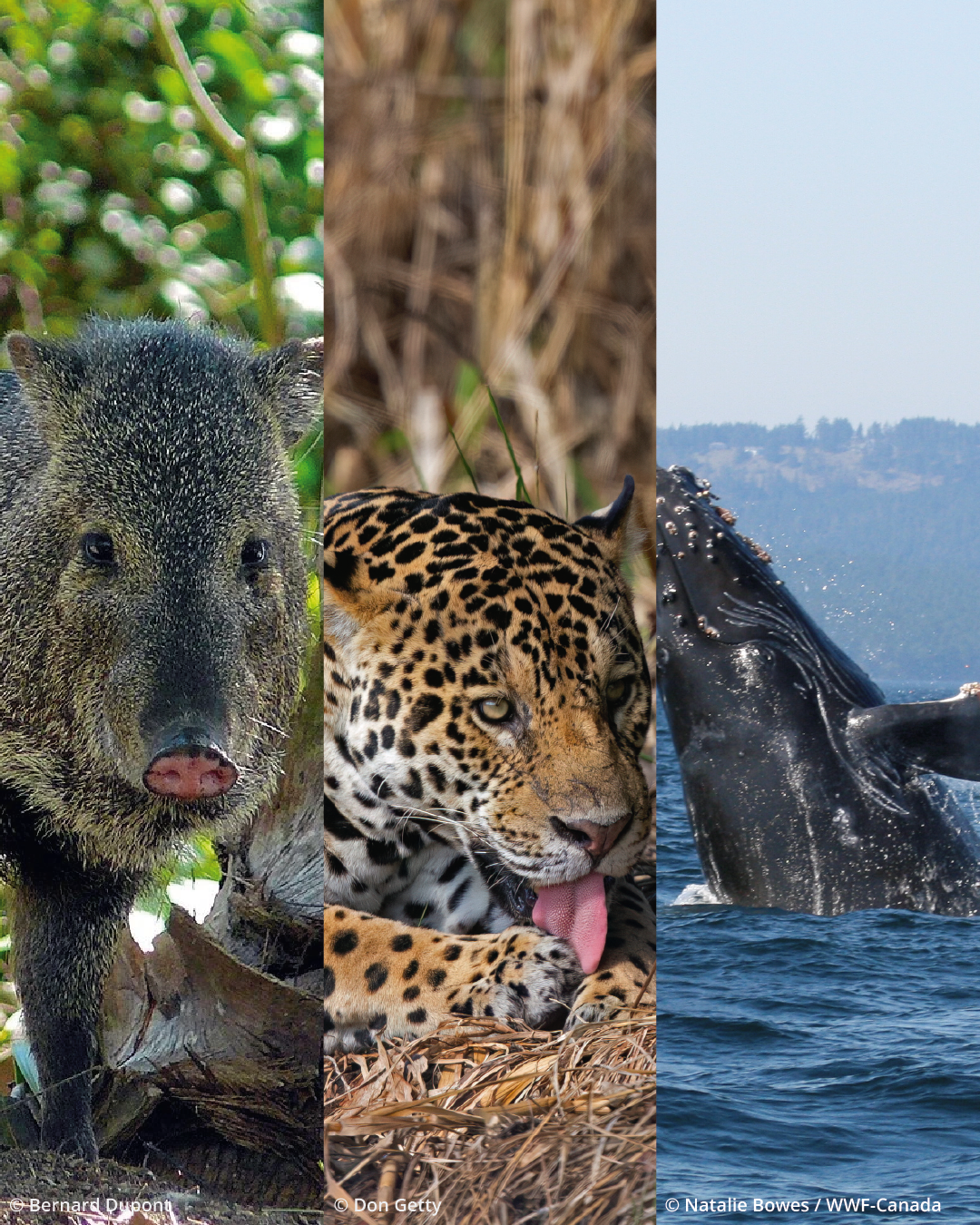
WWF Peru will be present in the “storytelling and children’s workshop zone” with activities that will allow visitors to learn about the results of camera trap monitoring in the Amazon aimed at jaguar conservation, receive information about other mammals that coexist in the ecosystem, and explore ocean dynamics, particularly through whale conservation initiatives.
By visiting our stand, you will learn how WWF Peru uses tools such as camera traps, acoustic recorders, and artificial intelligence-based analysis platforms like Wildlife Insights to monitor species such as the jaguar, the Andean bear, and the mountain tapir, while also providing technical support to protected natural areas for the processing and analysis of biological information.
One of these efforts took place in the Pucacuro National Reserve, where 65 camera traps were installed between May and September 2023. The monitoring recorded 35 wildlife species: 25 mammals, 9 birds, and 1 reptile.
 © Reserva Nacional Pucacuro
“The collared peccary was the species with the highest detection frequency, recorded by 60% of the camera traps and with more than 4,600 observations. These records provide information on habitat use and population dynamics within the monitored area. In addition, among the recorded species were key felines such as the jaguar, puma, and ocelot, which play an essential role in ecological regulation and maintaining the trophic structure of ecosystems”, said Juriko Rupay, Species Conservation Officer at WWF Peru.
 © Reserva Nacional Pucacuro
By attending the festival, visitors will also learn more about marine ecosystems. Monitoring migratory species such as whales contributes to understanding ecological connectivity and the dynamics of ocean ecosystems. Their migratory routes and movement patterns provide valuable information for marine management and conservation.
The information generated through biological monitoring contributes to decision-making processes for biodiversity conservation and ecosystem management in the face of threats such as habitat loss and climate change.
Faced with threats like habitat loss and climate change, biological monitoring has become a key tool for understanding ecosystem dynamics and strengthening conservation strategies. Through these initiatives, WWF Peru seeks to bring science and biodiversity knowledge closer to more people.